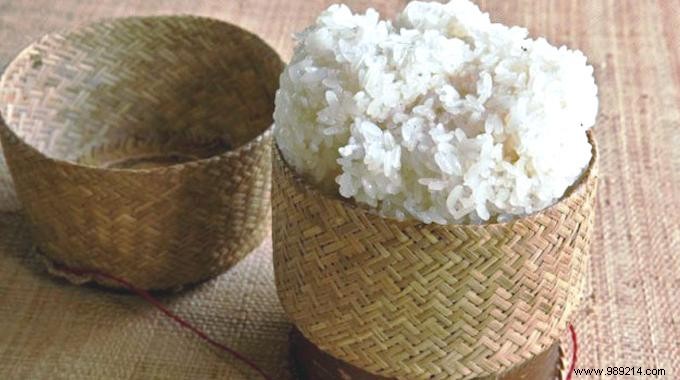
Craving authentic sticky rice but no rice cooker in sight? No worries—I've perfected two reliable methods that deliver restaurant-quality results right in your kitchen.
These techniques are straightforward, backed by years of testing Asian rice varieties, and yield glutinous rice that's perfectly sticky and flavorful.
Start by selecting the right rice to ensure success every time.
 Contents
 With countless rice options—long-grain, basmati, brown, or jasmine—not all qualify as sticky rice. Supermarket staples like basmati or standard Thai rice from stores such as Intermarché (in France) won't work.
Opt for authentic glutinous rice from Asian, Chinese, or Japanese markets. Look for its distinctive opaque appearance compared to clearer varieties.
The secret to flawless sticky (or glutinous) rice starts with thorough rinsing under cold water until it runs clear. This removes excess starch, enhancing flavor and texture.
Soak the rinsed rice in plenty of water for at least 1 hour—or overnight for best results. Patience here pays off with superior stickiness.
Ready to cook? Here's how.
1. Steamer Method (Classic and Reliable)
Fill your steamer pan with water and heat. Line the steamer basket with a clean tea towel, add the soaked rice, spread evenly, and cover with the lid.
Steam for 20 minutes. Check for translucency and perfect stickiness. A pressure cooker works similarly for even faster results.
2. Microwave Method (Quick and Convenient)
Soak rice in hot water for 10 minutes first—skipping this leads to uneven cooking, as I've learned from trial and error.
Add water just above the rice level in a microwave-safe bowl (avoid plastic to prevent melting). Microwave on high for 3 minutes, stir, and repeat until grains are fully translucent.
Ideal when you lack a steamer basket.
That's it—sticky rice mastery achieved! Simple, right? It's ideal for homemade sushi or Thai dishes.
Skip buying an electric rice cooker (priced 30-70€) and use what you already have. These methods save money without sacrificing quality.
