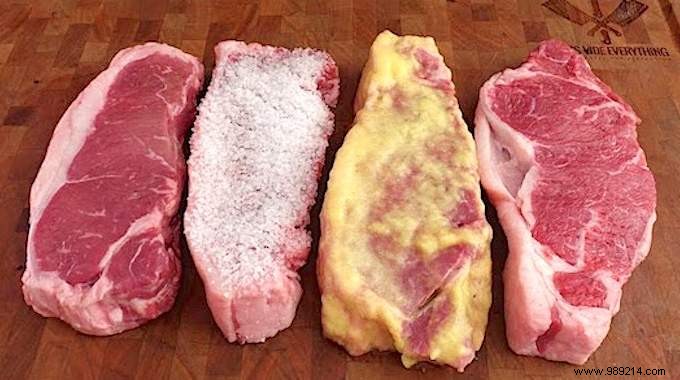
Nothing beats perfectly tender meat—especially when grilled to perfection.
Want to achieve that melt-in-your-mouth texture while boosting flavor? A chef friend from a top Paris restaurant shared these proven techniques with me after years in professional kitchens.
Here are 11 expert tips for tenderizing meat to keep it moist and delicious. See how:
Some avoid salting meat early, fearing it toughens. Here's the pro secret: Generously salt steaks on both sides one hour before cooking. I've tested this countless times—it's transformative. Opt for sea salt over table salt. The salt draws out moisture, which reabsorbs and breaks down proteins for superior tenderness.
Black tea's tannins naturally soften meat fibers. Brew strong tea (1-2 cups), cool it, and marinate meat for several hours. This works wonders on beef.
Acidic ingredients like lemon, lime, pineapple juice, mustard, apple cider vinegar, balsamic, or red wine break down tough fibers while adding depth. Red wine's tannins shine in stews like boeuf bourguignon.
Tomatoes' natural acidity, amplified by vinegar in sauces, tenderizes and flavors meat beautifully. Ideal for pre-plancha marinades or barbecues.
Beer's alpha acids and tannins tenderize pork or beef while infusing robust flavor. Marinate for at least one hour before grilling cuts like beef cheeks, filet mignon, or veal.
Surprisingly effective: Marinate in Coca-Cola for 1-24 hours. Its acidity tenderizes, and sugars caramelize for a sweet-savory crust. Try on pork chops.
Ginger's proteolytic enzymes dismantle proteins naturally. Beyond flavor, it's a go-to for tenderizing chicken in marinades.
Strong brewed coffee tenderizes via natural compounds and adds a rich taste. Cool, marinate up to 24 hours, then grill skewers or sirloin for exceptional softness.
These dairy products' acidity and calcium activate enzymes, breaking down proteins for tenderness without overpowering flavor.
These fruits' enzymes soften tough cuts with an exotic sweet-salt profile. Puree or slice, marinate 3-4+ hours—or use papaya powder—for thin slices.
Like salt, baking soda penetrates and breaks down proteins. Sprinkle and rub on meat, refrigerate 2 hours; or make a paste, apply, wait hours, then rinse thoroughly.
Effective marinades blend acid (tenderizes), oil (seals flavors), and herbs/spices (season). Professional kitchens rely on this balance.
Use glass or non-reactive dishes for acidic marinades—steel can impart off-flavors. Limit solo acid exposure (like vinegar) to 2 hours to avoid toughening. For longer marinades, include oil. These methods suit filet mignon, pork roast, veal, turkey, lamb, duck, and more.
