
How should you store fresh chicken eggs—at room temperature or in the fridge?
It's a common question for home cooks and food enthusiasts alike.
The answer isn't as straightforward as you might think.
If you're accustomed to refrigerating eggs like I am, you might be surprised to learn it's not always recommended. Here's the expert reasoning:

First, rest assured: you're not alone in wondering about the best way to store eggs.
Leading food scientists have conducted rigorous studies to determine optimal storage without compromising safety.
These studies show refrigeration isn't essential.
Researchers tested one batch of eggs at 6°C in a fridge and another at room temperature, checking for salmonella, E. coli, listeria, and other bacteria after 15 days.
Results: No significant differences. Both batches were equally safe.
Thus, storing eggs in a cupboard or at room temperature is perfectly fine.

The key is maintaining consistent temperatures to prevent thermal shocks.
You've likely noticed eggs sold on regular supermarket shelves, not refrigerated ones, regardless of packaging.
This ensures no temperature fluctuations from farm to store.
The eggshell provides natural protection, but sudden changes cause condensation, making it easier for bacteria to penetrate.

Renowned chefs like Raymond Blanc argue refrigeration harms egg flavor.
The porous shell absorbs fridge odors easily—great for truffle-infused eggs, disastrous next to strong cheeses, onions, or garlic.
Cold eggs from the fridge also don't emulsify well in recipes like homemade mayonnaise, which is why recipes advise tempering them first.
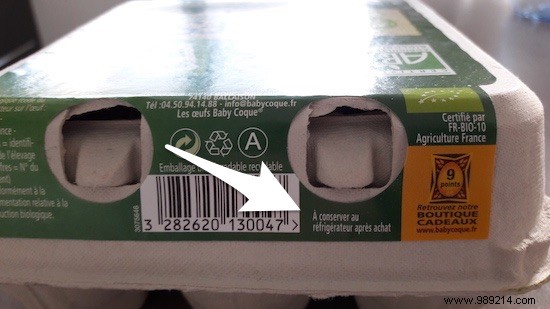
This label is often mandatory for liability reasons, advising refrigeration to minimize post-purchase temperature changes.
In professional settings like catering, eggs must be stored at +5°C, often pasteurized for safety.

Some experts, like Drs. Rosamund Baird and Janet Corry from the University of Bristol's School of Veterinary Science, recommend refrigeration for consistency and longevity.
The UK Ministry of Agriculture agrees it extends shelf life and reduces salmonella risk (though low overall).
In the US, eggs are washed (removing natural cuticle), sold refrigerated, and must stay that way.

When it's very hot: Refrigerate if your kitchen exceeds cool room temperature to avoid extremes.
For long-term storage: Fridge helps preserve freshness longer.
Fridge storage caveats:

Ultimately, consistency matters more than fridge vs. room temp: stable, cool conditions without fluctuations.
Avoid heat sources like ovens, strong odors, and unclean areas. Clean your fridge regularly and buy fresh as needed.
Freeze excess eggs (shell-free): separate yolks and whites, label with date and quantity in freezer bags.
