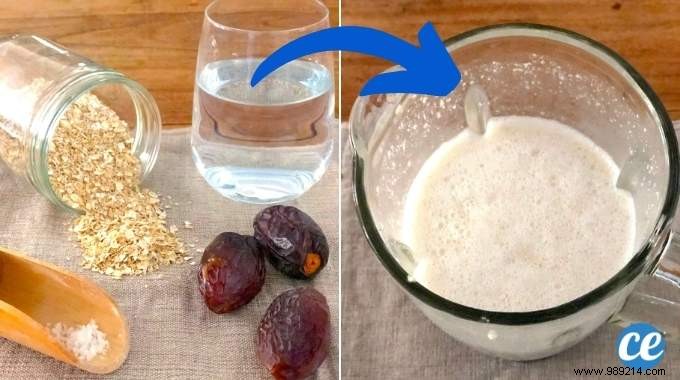
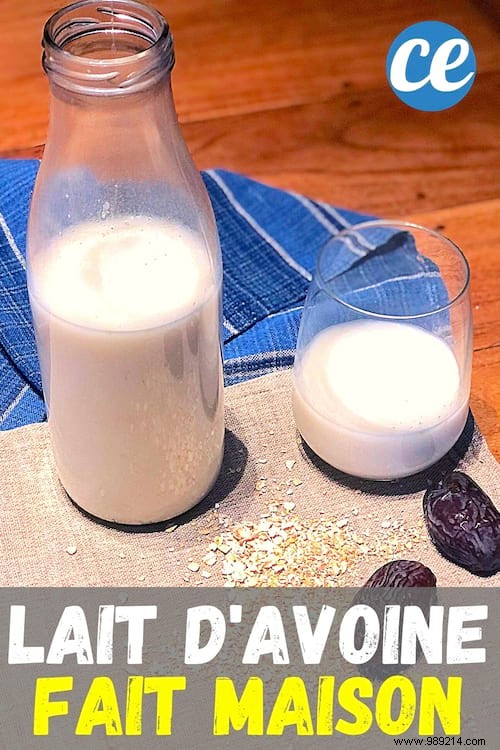
Learn how to make fresh homemade oat milk right in your kitchen. As someone who's perfected plant-based milks over years of testing recipes, I can attest to its versatility for health, hair care, and cosmetics.
It's packed with benefits and incredibly simple to prepare. This expert-tested recipe yields creamy results using just two main ingredients, a blender, and two minutes.
Trust me, it's straightforward, delicious, and far superior to store-bought. Here's how to make creamy oat milk at home quickly. Watch:
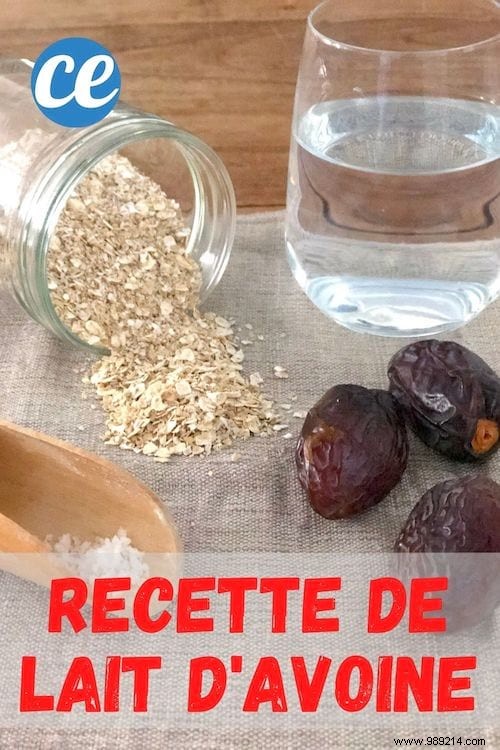
- 120g rolled oats
- 1 liter of water
- 1 pinch of salt
- 1 blender
- 1 sieve (t-shirt or clean towel or tea towel)
- 1 salad bowl
- 1 empty 1 liter bottle
- 1 funnel
Preparation: 2 min - For 8 people
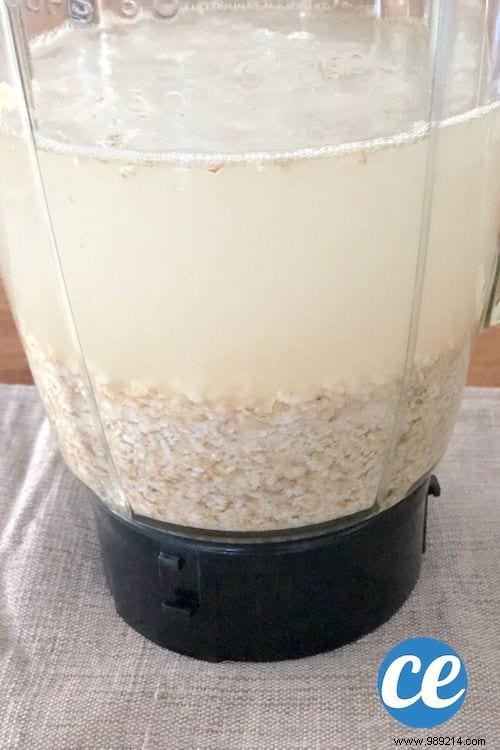
1. Pour the rolled oats into the blender.
2. Add the water.
3. Secure the lid and cover with a tea towel to prevent splashing.
4. Blend on high speed for 30 seconds to 1 minute.
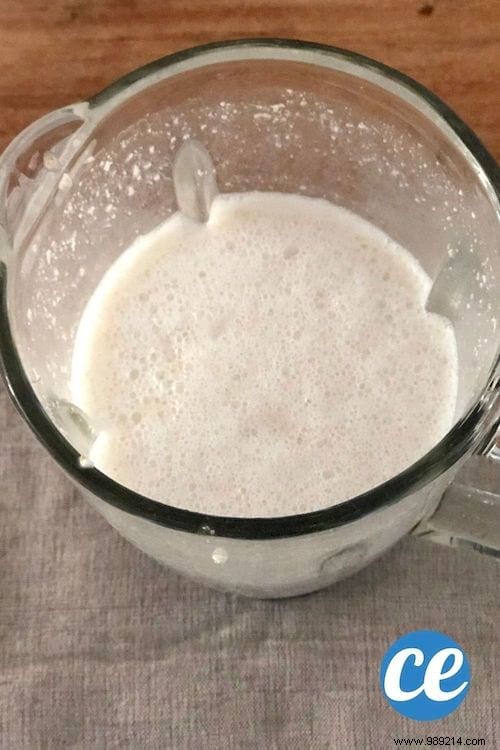
5. Taste and adjust if needed.
6. Line the bowl with a t-shirt, towel, or tea towel.
7. Gently pour the mixture through to strain.
8. Use the funnel to transfer into a sealable 1-liter bottle.
9. Refrigerate.
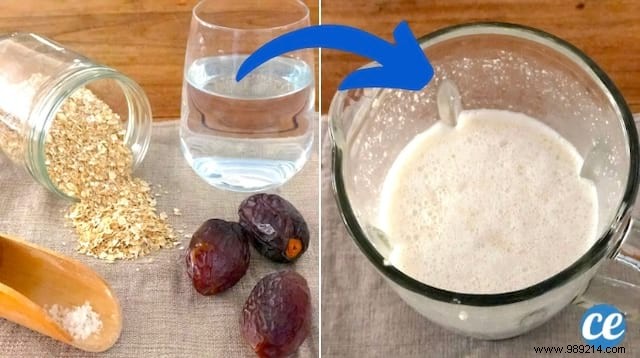
Voilà! You've got delicious, creamy homemade oat milk. It's quick, easy, and consistently smooth – no fancy juicer, Thermomix, or Vitamix required.
No need to shop at supermarkets like Lidl, Leclerc, Auchan, or Naturalia either. This reliable method uses just two ingredients in minutes.
Store in the fridge for up to 5 days. Shake well before serving chilled, and avoid heating.
- Skip food-grade fabric filters or cheesecloth; they let too much pulp through. Mesh colanders aren't ideal either.
- Don't over-blend the oats, as it can make the milk viscous. Filter twice for the smoothest texture.
- For thicker milk, use 700ml water; for thinner, stick to 1 liter.
- Repurpose the leftover pulp into oat cream or baked goods – zero waste!
Oat milk is blended rolled oats and water, strained for a creamy liquid. It's a nutritious cow's milk alternative, vegan-friendly, and cholesterol- and lactose-free.
Rich in complex carbs, fiber, calcium, and low in saturated fats, it's loaded with B vitamins, E, K, plus minerals like iron, magnesium, and more. Ideal during pregnancy and resource-efficient – uses 15x less water than cow's milk, 8x less than almond milk.
Brands like Alpro, Oatly, and Bjorg popularized it, but homemade is best. At 42 kcal/100ml with 0.4g protein, it fits keto diets too.
The leftover pulp aids digestion and combats constipation thanks to its high fiber. Best in the morning to avoid evening bloating.
Oats shine in beauty too – that's why brands like Aderma, Klorane, and Yves Rocher use them for skin, hair, and body care.
Its natural creaminess and subtle sweetness make it perfect for coffee, matcha, cereals, cakes, granola, smoothies, crepes, flans, or even savory quiches.
Add a pitted date or tablespoon of maple syrup for sweetness. Vanilla extract for exotic notes, 2 tbsp cocoa for chocolate, or blend in berries/bananas for fruity twists.
Blend 30-45 seconds max, skip soaking, and avoid heating. Double-strain with a t-shirt or tea towel to remove excess starch. Fine for muesli with bits, but essential for coffee.
Traditional rolled oats are best. Quick-cooking ones are over-processed and often yield viscous results.
It's debated – may contain traces. Even labeled gluten-free oats can be an issue for celiacs or severe allergies.
Up to 5 days in an airtight fridge container. Discard if it smells off. Separation is normal; shake well.
Higher protein means better froth. Use an electric frother for lattes and hot drinks.
