Defrosting meat properly is essential to prevent bacterial growth and protect your family's health.
Unsafe methods can promote bacteria like Salmonella or E. coli. Here's how to thaw meat correctly with trusted, expert-recommended techniques.
These three methods ensure safe defrosting for beef, chicken, pork, and more—backed by food safety guidelines from authorities like the USDA.
Discover the 3 safest ways to defrost meat:
The safest method is planning ahead for slow defrosting in the refrigerator.
Ground meat, stew meat, and beef steaks thaw in about 1 day.
Bone-in cuts and whole roasts take 2 or more days.
Once thawed, raw meat stays safe in the fridge for 3-5 additional days before cooking.
If you change your mind, you can refreeze it without cooking—as long as it hasn't exceeded that window.
This flexibility makes fridge thawing reliable and convenient for busy households.
Keep the meat in its airtight packaging, or seal it in a leak-proof bag.
Submerge in cold tap water, changing the water every 30 minutes to keep it cold.
Small cuts thaw in 1 hour or less; a 1.5 kg (3.3 lb) roast takes 2-3 hours.
For faster results, switch to lukewarm water—but cook immediately after.
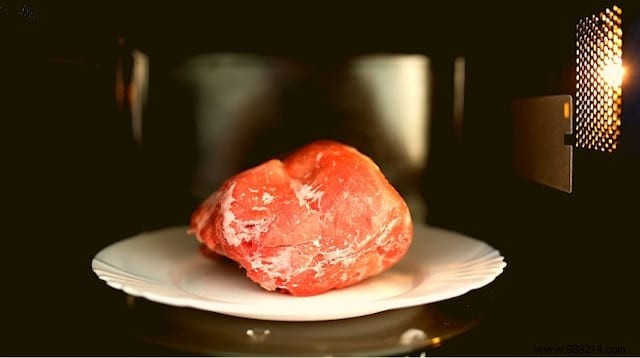
Always cook meat immediately after microwave thawing, as some areas may start cooking, leaving bacteria in warmer spots.
Remove packaging, place on a microwave-safe plate, and use the defrost setting. Adjust power by weight and check frequently to avoid cooking edges.
Approximate times:
- 500g minced meat: 8-10 minutes, rest 10 minutes before cooking.
- 2kg rib roast: 22-26 minutes, rest 15 minutes before cooking.
- 1kg steak or sirloin: 10-14 minutes, rest 10 minutes before cooking.
Now you have three reliable methods to defrost meat safely, minimizing risks for red meats like beef and white meats like chicken or pork.
The microwave is quickest but can slightly affect texture and flavor, plus it uses more energy.
Never thaw meat at room temperature on the counter—bacteria multiply rapidly between 4°C (40°F) and 60°C (140°F).
Meat thawed in cold water or microwave must be cooked before refreezing, as temperatures may exceed safe limits.
You can cook frozen meat in the oven, stovetop, or grill (add 50% more time), but avoid pressure cookers.
