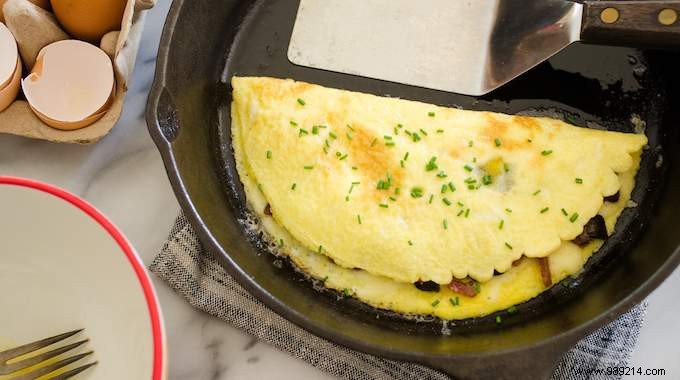
As a home cook who's mastered the omelet through years of trial and pro chef advice, I turn to them for effortless brunches with friends. Quick, budget-friendly, and endlessly customizable with mushrooms, bacon, or herbs.
Ever wonder why restaurant omelets are always so much lighter and fluffier? A chef friend shared his secrets for 3-star results. Here are 7 expert tips for a delicious omelet every time. Watch:

Choose organic eggs no older than 15 days for the best results. Freshness is key to a superior omelet texture and safety.
Beyond 15 days, eggs lose freshness and require thorough cooking to prevent issues—but omelets shine when lightly cooked, so start fresh.
Top omelet makers limit batches to 6 eggs max. More risks uneven cooking and density.
Quality trumps size: Opt for multiple smaller omelets over one oversized flop.
For that signature foaminess, add a pinch of baking soda per two eggs (2 pinches for 4, 3 for 6). It acts like yeast, puffing up during cooking for airy perfection.
Incorporate 5 cl (about 1.7 oz) of water while whisking. This boosts lightness and digestibility—try it, and feel the difference in texture.
Whisk by hand with a fork, not a mixer, for better control. Stop at the first bubbles to avoid overbeating and flat results.
Gas heat in a cast iron skillet is ideal; nonstick works too. Pour into a screaming-hot pan, then lower heat for a creamy, unctuous finish.
Generously butter or oil the pan—it ensures easy release. In my Périgord roots, duck fat elevates it further. Give it a go and taste the difference!
