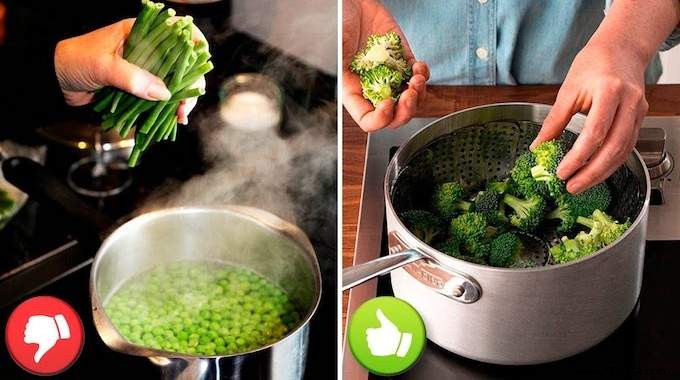
Eating vegetables boosts your health, but proper cooking is key to preserving their vitamins and vibrant flavors.
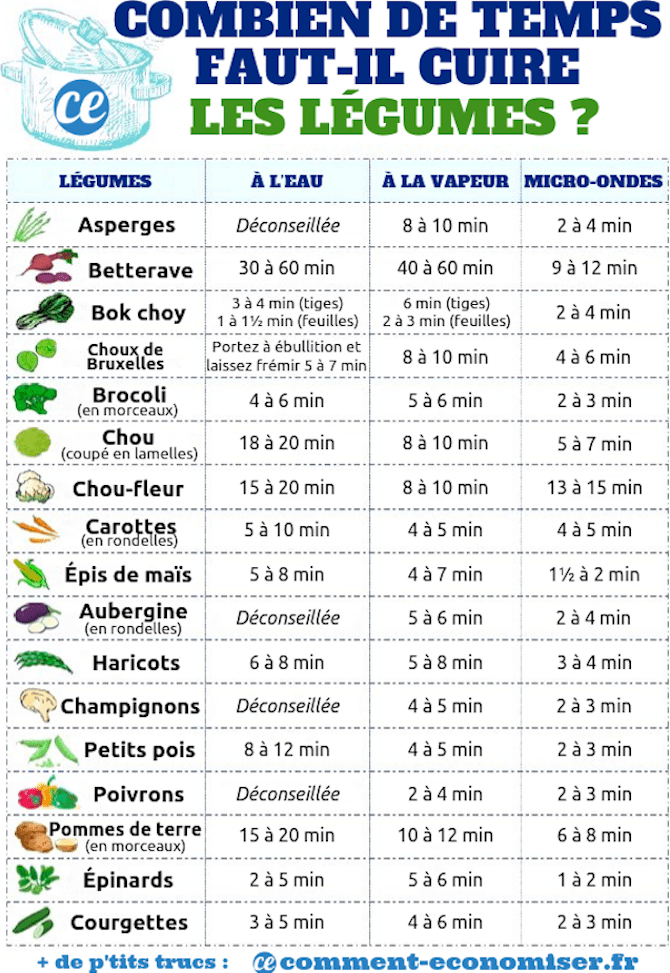
To maximize nutritional benefits, respect precise cooking times, which vary by vegetable and method. This practical guide, drawn from established culinary expertise, details exact times for boiling, steaming, and microwaving common vegetables.
 Contents
 Click here to easily print the guide in PDF.
Boiling: not recommended
Steaming: 8 to 10 min
Microwaving: 2 to 4 min
Boiling: 30 to 60 min
Steaming: 40 to 60 min
Microwaving: 9 to 12 min
Boiling: 3 to 4 min (for the stems) and 1 to 1½ min (for the leaves)
Steaming: 6 min (for the stems) and 2 to 3 min (for the leaves)
Microwaving: 2 to 4 min
Boiling: bring to a boil and let simmer for 5 to 7 minutes
Steaming: 8 to 10 min
Microwaving: 4 to 6 min
Boiling: 4 to 6 min
Steaming: 5 to 6 min
Microwaving: 2 to 3 min
Boiling: 18 to 20 min
Steaming: 10 to 15 min
Microwaving: 5 to 7 min
Boiling: 15 to 20 min
Steaming: 8 to 10 min
Microwaving: 13 to 15 min
Boiling: 5 to 10 min
Steaming: 4 to 5 min
Microwaving: 4 to 5 min
Boiling: 5 to 8 min
Steaming: 4 to 7 min
Microwaving: 1½ to 2 min
Boiling: not recommended
Steaming: 5 to 6 min
Microwaving: 2 to 4 min
Boiling: 6 to 8 min
Steaming: 5 to 8 min
Microwaving: 3 to 4 min
Boiling: not recommended
Steaming: 4 to 5 min
Microwaving: 2 to 3 min
Boiling: 8 to 12 min
Steaming: 4 to 5 min
Microwaving: 2 to 3 min
Boiling: not recommended
Steaming: 2 to 4 min
Microwaving: 2 to 3 min
Boiling: 15 to 20 min
Steaming: 10 to 12 min
Microwaving: 6 to 8 min
Boiling: 2 to 5 min
Steaming: 5 to 6 min
Microwaving: 1-2 min
Boiling: 3 to 5 min
Steaming: 4 to 6 min
Microwaving: 2 to 3 min

These three gentle methods best preserve vegetables' nutritional qualities.
1. Pressure cooking
The pressure cooker uses minimal water turned to steam under pressure, retaining color and nutrients. It's one of the quickest methods (just 1-2 min).
2. Microwaving
Microwaving is fastest and akin to steaming. Use little water to keep nutrients intact—for asparagus, add just 2-3 tablespoons.
3. Steaming
Steaming in a basket preserves nutrition if you use minimal water (about 120 ml, boiled first) and short times—5-7 min for most vegetables.
- Vegetables' enzymes halt vitamin production post-harvest but can cause losses. Refrigerate most until cooking to slow this.
- Oxidation-sensitive vitamins require airtight storage for cut or juicy vegetables in the fridge.
- Water-soluble vitamins (like C and B) leach out during boiling—retain cooking water for soups or broths.
- Fat-soluble vitamins (A, E) withstand light cooking better; pair with healthy fats for absorption.
- Avoid frying, which destroys most vitamins due to high heat. Opt for grilling or roasting instead—delicious and nutrient-friendlier.
In summary: Gentle methods and proper storage ensure you enjoy vegetables' full nutritional benefits.
