Storing fruits and vegetables properly can be trickier than it seems. Like many, I've learned the hard way—unlike my grandmother, who instinctively knew the perfect spot for every item.
I used to toss bananas and tomatoes in the fridge while leaving apples and strawberries out. Big mistake! The issue? Some produce emits ethylene gas, which speeds up ripening and spoilage.
To keep your fruits and vegetables fresh longer, avoid incompatible pairings in your crisper drawer. Here's my trusted guide to optimal storage. Watch and learn:
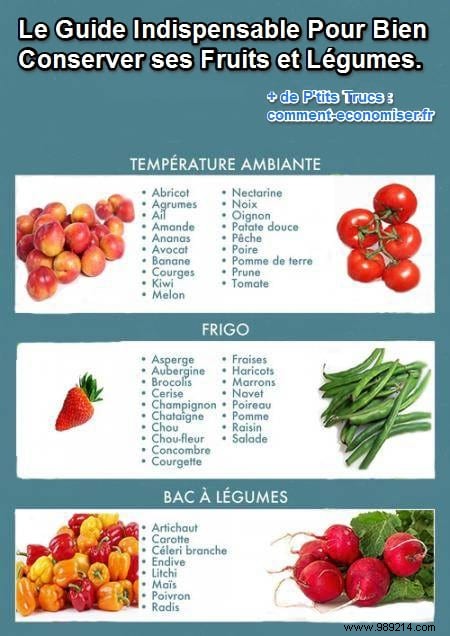
To easily print it on 1 single page, click here.
Citrus: Lemons, oranges, and grapefruits store well outside the fridge thanks to their thick skins. Expect 1 week at room temp or 2 weeks in the fridge.
Pineapple: Keep out until ripe, then refrigerate for up to 5 days.
Garlic: Store whole heads at room temperature for 3-5 weeks; loose cloves last about 10 days.
Avocados: Ripen at room temp—speed it up in a paper bag with a banana. Refrigerate to slow ripening once ripe.
Bananas: High ethylene producers—keep at room temp, away from other produce. If over-ripening, refrigerate in an airtight bag (skin blackens, but fruit stays good).
Squash: Store at room temperature; they save precious fridge space.
Kiwi: Ripen at room temp. Once soft, store in a plastic bag in the fridge for another week. Speed ripening with a banana or apple in a paper bag.
Melon: Ripen at room temp, then wrap in plastic and refrigerate for a week. Accelerate with a banana or apple in a paper bag.
Walnuts, hazelnuts, almonds: Keep in a cool, dry, ventilated spot to prevent rancidity.
Onions: Dry, ventilated area for 2-3 months—never near potatoes, or both spoil quickly.
Sweet potatoes: 2-3 months in a cool, dry, ventilated spot; 1 week at room temp.
Peaches, plums, nectarines, apricots: Ripen at room temp (wash just before eating). Refrigerate ripe ones in plastic for 3-5 days.
Pears: Ripen green pears at room temp, then fridge in plastic for another week.
Potatoes: Cool, dry, ventilated spot for 2-3 months—never with onions.
Tomatoes: Always room temp, never in plastic. Eat at room temp to avoid ethylene-induced rot.
Asparagus: Fragile—consume quickly. Wrap in damp cloth, cover with foil; lasts 1-2 days.
Eggplant: Plastic bag in fridge.
Broccoli, cabbage, cauliflower: Refrigerate in packaging; wash before cooking.
Cherries: Plastic bag; wash before eating.
Mushrooms: Paper bag for 1 week; no pre-washing.
Chestnuts: Paper bag for 4-7 days.
Cucumber: Plastic bag; wash before eating.
Zucchini: Paper bag; wash before eating.
Strawberries: Original packaging for 4-7 days.
Green or butter beans: Plastic bag; wash before eating.
Lettuces, salads, baby spinach: Wash, wrap in paper towel, then plastic bag.
Chives: Plastic bag for 7 days.
Leeks: Plastic bag for 7 days.
Apples: High ethylene—store separately in plastic bag. No pre-washing.
Grapes: Perforated plastic bag for air circulation; wash before eating.
Artichokes: Ripen at room temp, then plastic bag in drawer.
Carrots: Remove soil and tops (leave 1 cm). Wrap in paper towels, seal in bag.
Celery: Rinse, paper towels, foil wrap, then drawer.
Endives: Remove damaged leaves, paper towel wrap, paper bag.
Lychees: Perforated plastic bag for 4-7 days.
Corn: With husks as-is; without, foil wrap.
Peppers: High ethylene—store separately in plastic bag.
Radishes: Remove tops, store in drawer.
This guide, honed from years of trial and error, will help you preserve produce longer and cut food waste. Save money and enjoy fresher meals!
