Difficulty: Intermediate
Scrape the new potatoes and shell the broad beans. Blanch them in boiling water for a few seconds, then slip off the skins by gentle pressure. Peel the spring onions. Set these vegetables aside.
Preheat the oven to 230°C (450°F, gas mark 7/8).
Halve the lamb kidneys, season with salt and pepper, and sear them in a hot pan with a little olive oil for 1 minute—they should remain rare inside.
Finely chop the parsley, thyme, chervil, and chives. Mix with the breadcrumbs, olive oil, and 1/2 tablespoon mustard to form the stuffing.
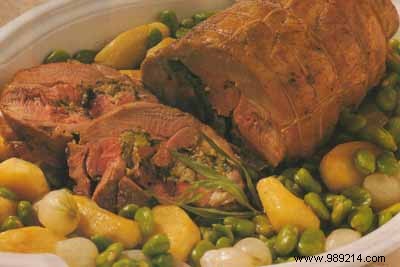
Brush the inside of the lamb shoulder with the remaining mustard. Spread the herb stuffing and arrange the halved kidneys inside. Tie loosely to secure everything. Season the exterior with coarse salt and pepper. Place the roast on a large baking dish. Halve the garlic cloves (unpeeled), coarsely chop the onion, carrot, and shallot, and scatter around the shoulder with the bones and trimmings.
Roast for about 40 minutes (15 minutes per pound), basting frequently and turning occasionally for crispy, golden skin.
Meanwhile, cook the potatoes in butter for 25-30 minutes. Add the spring onions, savory, broad beans, and tarragon. Season and cook another 10 minutes—the onions and beans should stay crisp.
Remove the shoulder from the dish and sprinkle with fine salt. Let rest 10 minutes. Degrease the pan, deglaze with a glass of water, and strain the juices.
Slice the shoulder and arrange on a platter surrounded by the vegetables. Drizzle with the hot strained juices. Serve immediately.
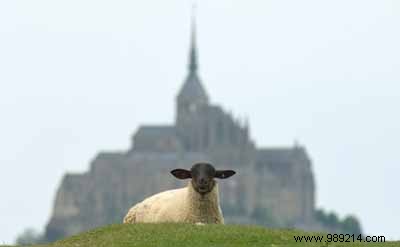
Photo: www.normandie-tourisme.fr
This recipe draws from the rich heritage of Normandy's salt marsh lambs, or agneau des herbus, grazed on the iodine-rich grasses of Mont-Saint-Michel Bay west of the Couesnon River. These lambs, weighing around 20 kg at maturity, develop their unique, firm, dark pink meat—never greasy or muttony—thanks to a diet of fescue grass, orach, and sea aster.
Born from late November to January, they spend at least 60 days weaning on these salty pastures, traveling 15 km daily between sheepfold and grazing lands, building muscle while dodging muddy criches and sea tides. This extensive, traditional farming—crossing local Grévy with Suffolk or Vendéenne breeds—yields just 2,000 lambs annually, sold May to October under the official agneau des herbus label by select butchers.
As breeder Yannick Frain notes, freedom is key to their flavor and tradition, despite risks like stampedes into the sea post-shearing.