Ever struggled with confusing recipe measurements? How many cl in a cup? Grams in a tablespoon? With teaspoons, tablespoons, cups, bowls, grams, and milliliters flying around, it's easy to get lost. The risk? Adding too much or too little of an ingredient and ruining your dish.
As experienced home cooks know, precision matters. That's why this free, reliable kitchen conversion chart is indispensable for flawless results every time. Here's everything you need:
 Contents
 To easily print this conversion chart as a PDF, click here.
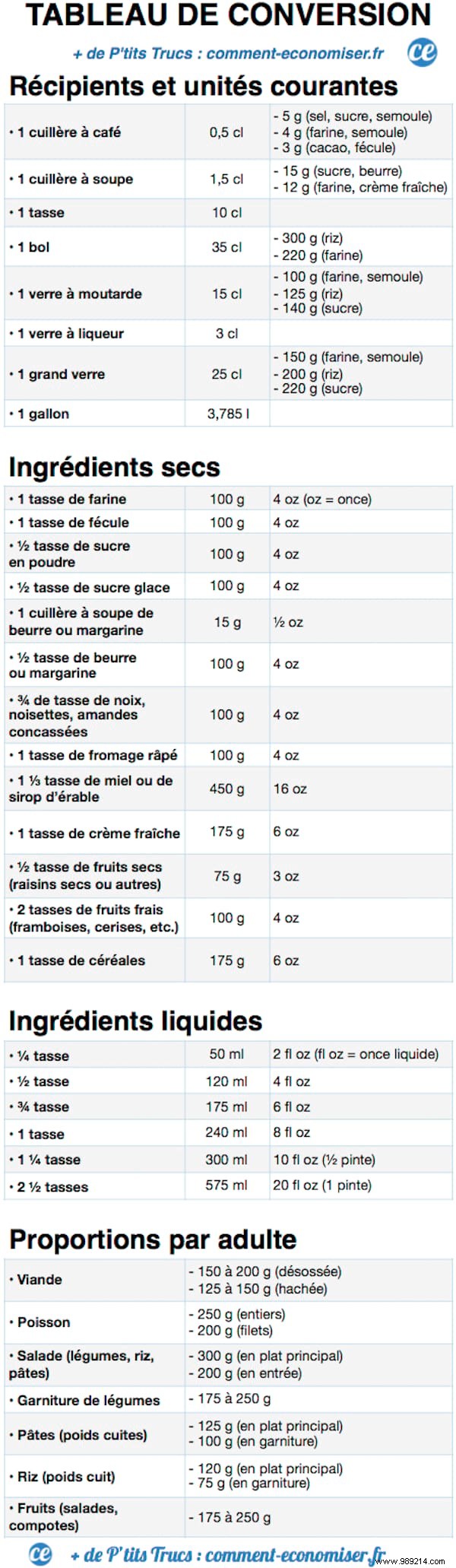
1 teaspoon
= 0.5 cl
= 5 g (salt, sugar, semolina)
= 4 g (flour, semolina)
= 3 g (cocoa, starch)
1 tablespoon
= 1.5 cl
= 15 g (sugar, butter)
= 12 g (flour, fresh cream)
1 cup = 10 cl
1 bowl
= 35 cl
= 300 g (rice)
= 220 g (flour)
1 mustard glass
= 15 cl
= 100 g (flour, semolina)
= 125 g (rice)
= 140 g (sugar)
1 liqueur glass = 3 cl
1 large glass
= 25 cl
= 150 g (flour, semolina)
= 200 g (rice)
= 220 g (sugar)
1 gallon = 3.785 liters
1 cup flour
= 100 g
= 4 oz
1 cup cornstarch
= 100 g
= 4 oz
½ cup powdered sugar
= 100 g
= 4 oz
½ cup icing sugar
= 100 g
= 4 oz
1 tablespoon butter or margarine
= 15 g
= ½ oz
½ cup butter or margarine
= 100 g
= 4 oz
¾ cup walnuts, hazelnuts, or crushed almonds
= 100 g
= 4 oz
1 cup grated cheese
= 100 g
= 4 oz
1 ⅓ cup honey or maple syrup
= 450 g
= 16 oz
1 cup fresh cream
= 175 g
= 6 oz
½ cup dried fruit (raisins, etc.)
= 75 g
= 3 oz
2 cups fresh fruit (raspberries, cherries, etc.)
= 100 g
= 4 oz
1 cup cereal
= 175 g
= 6 oz
¼ cup
= 50 ml
= 2 fl oz
½ cup
= 120 ml
= 4 fl oz
¾ cup
= 175 ml
= 6 fl oz
1 cup
= 240 ml
= 8 fl oz
1 ¼ cups
= 300 ml
= 10 fl oz (½ pint)
2 ½ cups
= 575 ml
= 20 fl oz (1 pint)
Meat
= 150-200 g (boneless)
= 125-150 g (chopped)
Fish
= 250 g (whole)
= 200 g (fillets)
Salad (vegetables, rice, pasta)
= 300 g (main course)
= 200 g (starter)
Vegetable garnish
= 175-250 g
Pasta (cooked weight)
= 125 g (main dish)
= 100 g (garnish)
Rice (cooked weight)
= 120 g (main course)
= 75 g (garnish)
Fruit (salads, compotes)
= 175-250 g
