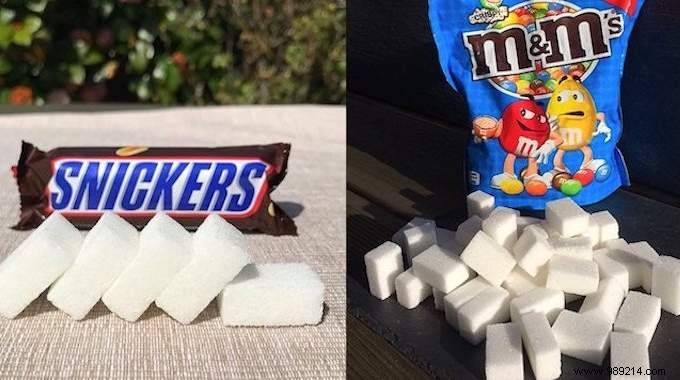
We all know excessive sugar intake is a concern, but quantifying it daily is challenging. In 2018, French students Arthur Grolleau and Léa Soulard launched the Instagram campaign "Sucrez Vos Fraises," brilliantly visualizing sugar content by photographing popular products next to their sugar cube equivalents. This viral approach effectively raises awareness about hidden sugars in everyday foods. See the striking visuals below:

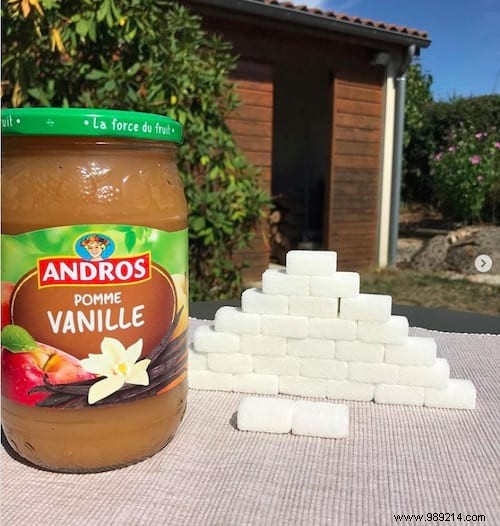
One jar of Andros applesauce contains the equivalent of 30 sugar cubes. Much comes from the apples' natural sugars, but it still includes 12% added sugar, based on nutritional labeling.
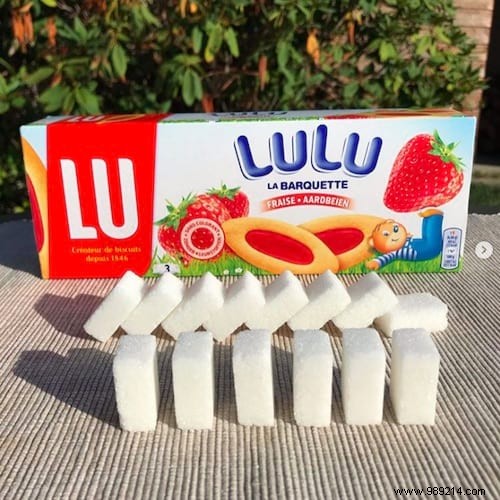
A 120g pack of 19 Strawberry Lu snacks holds 70.8g of sugar—over half the product (59%)—equaling 14 sugar cubes. Each snack has about 3.9g of sugar, nearly one cube.
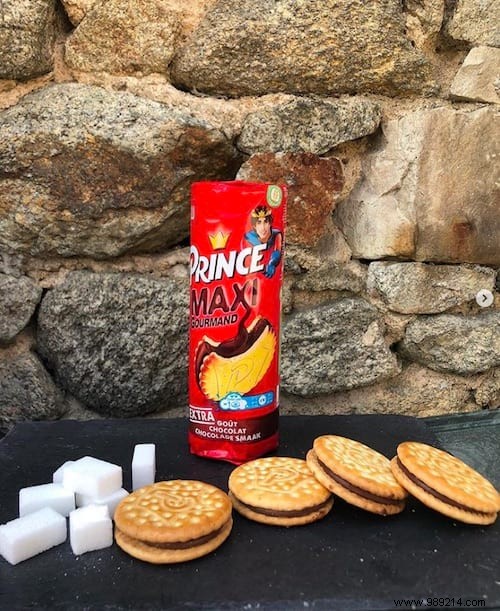
These addictive cookies make portion control tough. Four Prince biscuits contain 33.6g of sugar, or 6.5 cubes. For context, the WHO recommends no more than 25g of sugar daily.
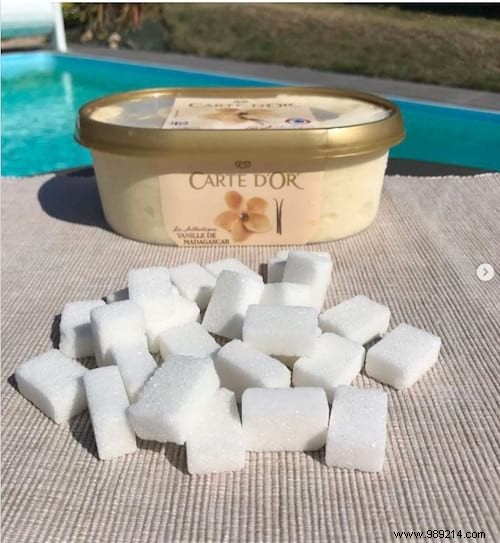
A 500g tub of Carte d'Or vanilla ice cream packs 130g of sugar—the equivalent of 26 cubes.
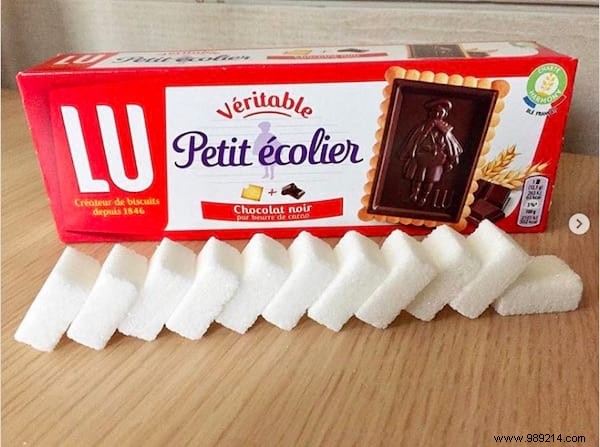
A 150g pack of 12 Lu Little Schoolboy dark chocolate cookies has 54g of sugar, or 11 cubes. Each cookie is nearly one cube.
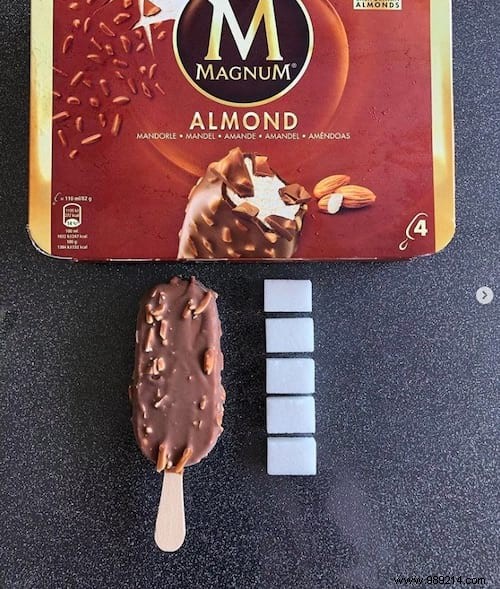
This 82g Magnum Almond ice cream contains 24g of sugar—5 cubes—matching the WHO's daily maximum in one treat.
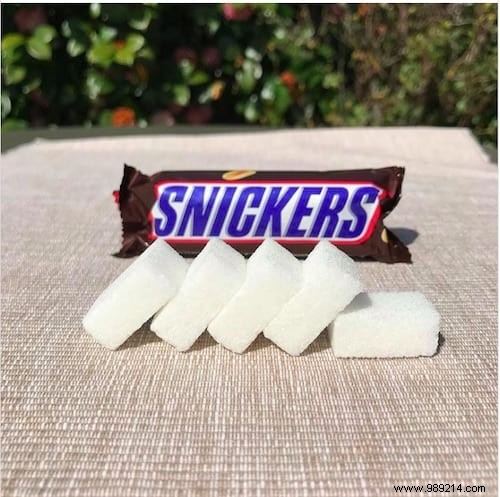
A 50g Snickers bar has about 25g of sugar (varies by variant), equaling 5 cubes.
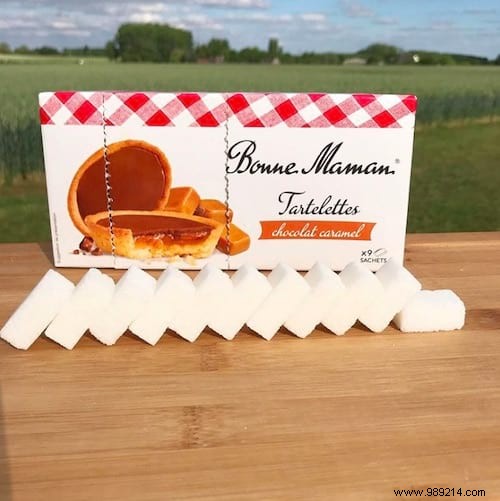
A 135g pack of 9 Bonne Maman tartlets contains 55g of sugar—11 cubes—or just over one per tartlet.
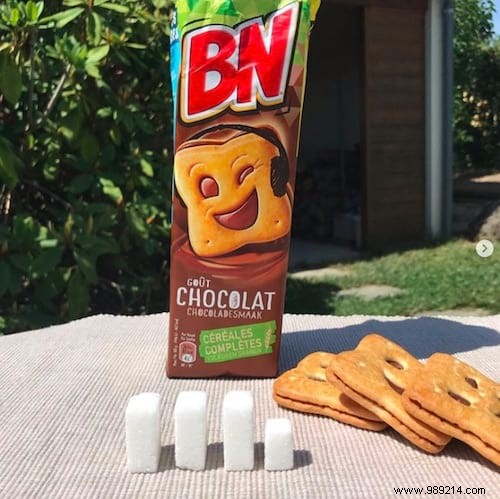
Three 57g BN snacks deliver 18g of sugar (3.5 cubes), making up 32% of the product.
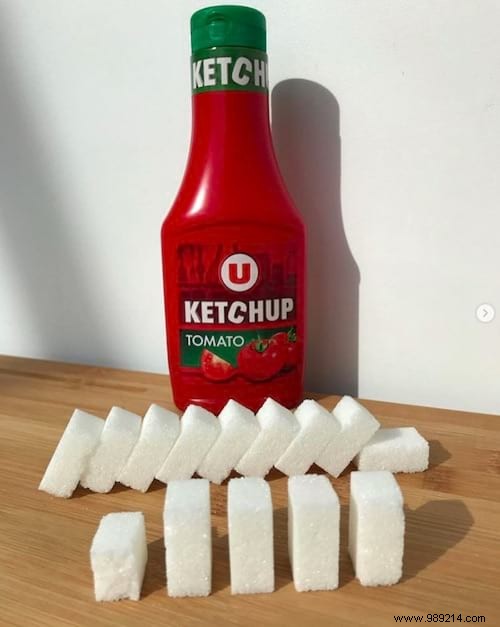
A 340g tub of ketchup is 66% tomatoes, with the rest largely glucose: 66.3g sugar, or 13 cubes.
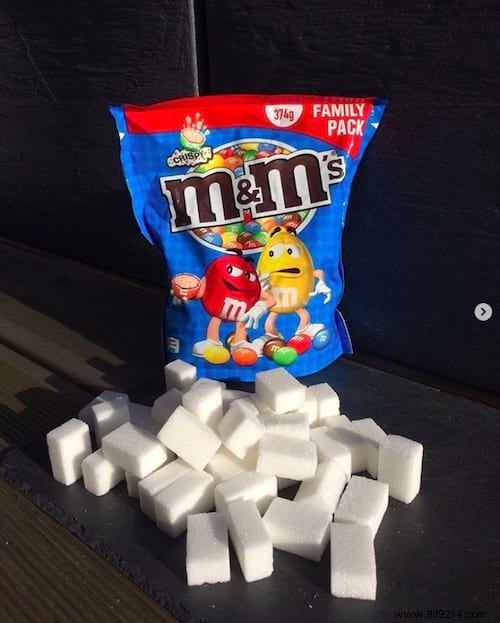
A 260g bag of M&M's Crispy has a staggering 206g of sugar—41 cubes.
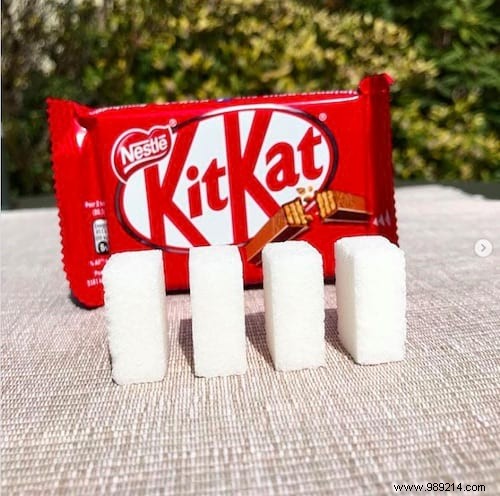
A 42g KitKat bar contains 19.2g of sugar (4 cubes), or 42% of its weight.
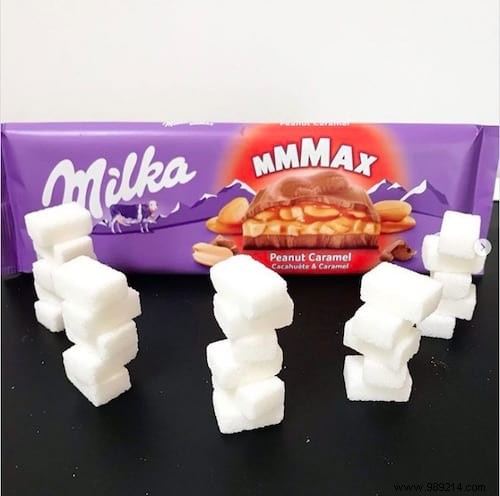
This 276g Milka bar has 132g of sugar (26 cubes), comprising 48% of ingredients.
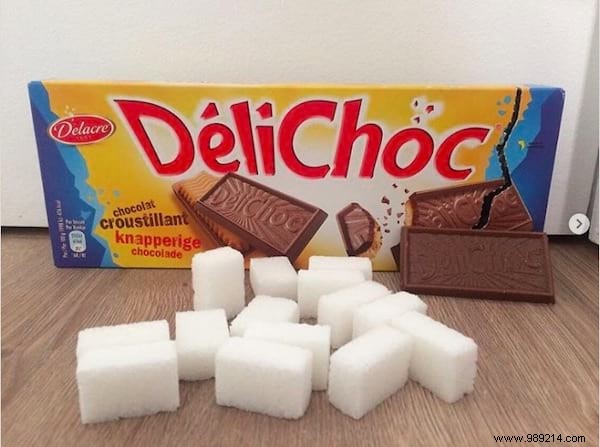
A 150g DéliChoc pack equals 14 cubes (70.6g sugar).
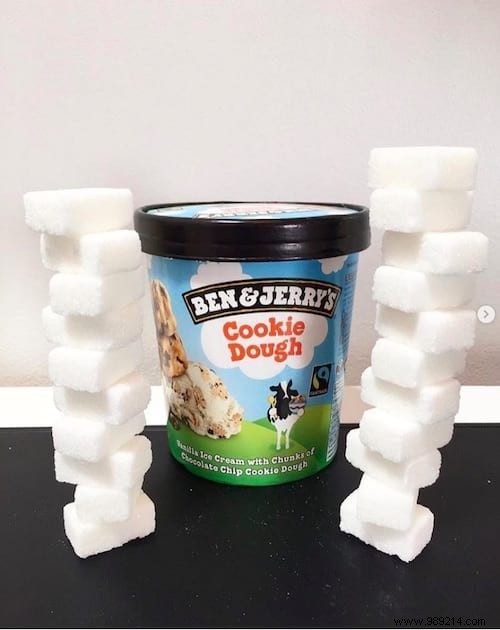
A 425g tub has 106.25g sugar (21 cubes); some from milk, most added.
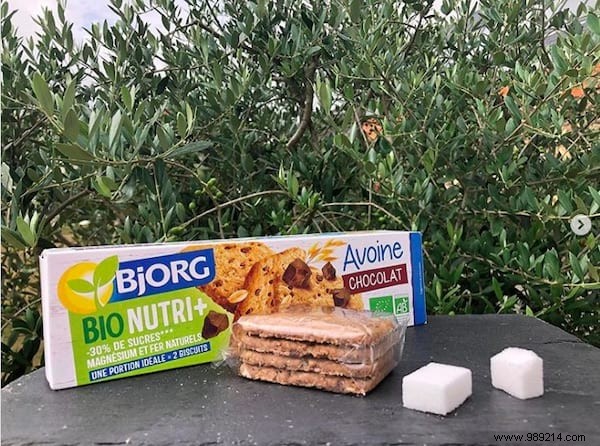
Four Bjorg cookies have 7g sugar (1.5 cubes)—low compared to others, but still 1/4 of WHO's daily limit.
