Preparing and cooking the foie gras: At least 3 days in advance, carefully denerve the duck foie gras, season generously with salt and pepper, and refrigerate for 12 hours. Cook in a small rectangular terrine using a bain-marie in a 60°C oven for 30 minutes. Cool completely, lightly press, and store in the refrigerator.
Preparing the pigeons: The day before assembling the terrine, season the pigeon breasts with salt and pepper, then sear for 1 minute 30 seconds on each side. Allow to cool. Meanwhile, roast the pigeon bones, calf's foot, and aromatic vegetables (carrots and onions) until deeply colored. Deglaze with Pinot Noir and an equal volume of water doubled, season, and simmer gently for 3 hours, skimming as needed. The stock should reduce by half, remain clear, and gel in the fridge after straining through cheesecloth.
Using a mandoline, slice 20 ultra-thin celery leaves from the heart, like cigarette paper. Blanch in 3 liters of boiling water with lemon juice for 30 seconds, then shock and drain on absorbent paper. Similarly, blanch flat-leaf parsley leaves in salted boiling water, refresh, and drain.
Assembling the terrine: Unmold the foie gras and slice lengthwise into halves. Line a terrine with double-layered cling film, allowing 2 cm overhang. Arrange celery leaves across the bottom and up the sides, layer half the blanched parsley, add 3 spoonfuls of chilled pigeon stock, then place the first foie gras layer. Nestle in the pigeon breasts, pressing firmly and coating with 6 spoonfuls of stock. Add the second foie gras layer, squeeze gently, top with remaining parsley and 3 more spoonfuls of stock, then seal with remaining celery leaves. Fold over the film and press lightly.
Finishing and serving: Slice the terrine and serve each guest a portion accompanied by warm pigeon jus.
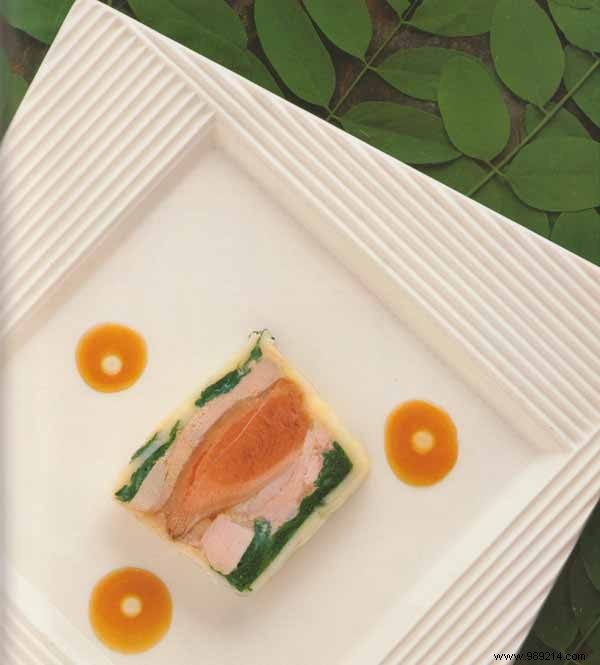
Source: Antoine Westermann, Buerehiesel, Strasbourg. Foie gras courtesy of Fabienne Labeyrie.
Hubert wishes you happy holidays
